
According to the IBM Cost of a Data Breach 2024 report, the average cost of a data breach now exceeds $4 million. Mobile-related incidents drive a sizable share of that cost.
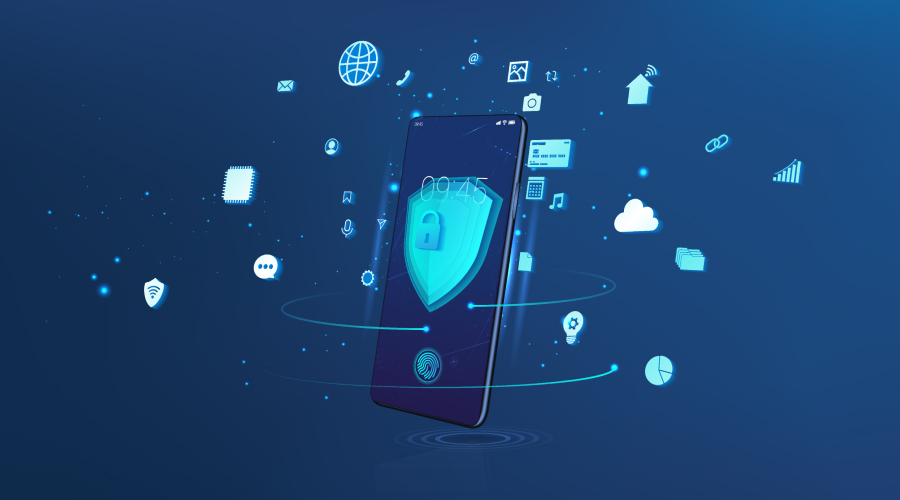
Security in mobile apps is no longer optional. Cyber threats are more frequent. Regulators demand stronger privacy controls. Users expect apps that protect their information. Together, these factors make security non-negotiable.
Too many teams chase sleek UI and powerful features. They delay or skimp on security. This leaves vulnerable openings. Attackers exploit these openings and secure customer data. Industries such as banking, healthcare, fintech, etc., process sensitive data. A strong security system protects both operations and reputations.
In this blog, we will discuss the basic security features every business mobile app must include. These are used against data compromise, ensure compliance, and bolster customer trust.

Why Security Should Be Your Top Priority in Business Application Development
In business application development, security must be a core requirement. Threats evolve. So defenses must evolve faster. A secure design reduces risk and long-term costs.
The Real Cost of Security Breaches
Breaches hit finances, operations, and trust. They trigger fines, legal fees, and cleanup bills. Companies pay for forensic investigations. They replace compromised credentials and patch vulnerabilities. Recovery can span months and cost millions.
Customers leave after breaches. Rebuilding trust takes years. Loss of business often exceeds direct financial penalties. Then there are compliance penalties. Regulations such as GDPR, CCPA, and HIPAA carry heavy fines. Healthcare and finance apps face strict audits. Noncompliance can halt operations in key markets.
User Trust as a Competitive Advantage
Security influences buying choices. Users read reviews and permissions. They choose apps with clear privacy practices and secure sign-in options. Secure apps keep customers longer. Small security wins, like biometric login, increase stickiness. In crowded app stores, security can be a deciding factor. Businesses that show they care about data stand out.
The Mobile-Specific Threat Landscape
Mobile threats differ from desktop threats. Mobile apps run on diverse hardware and OS versions. They store data locally. They rely on device APIs. This increases complexity. Business apps often have access to financial systems, personal records, or corporate resources. This makes them high-value targets. Malicious apps and phishing messages target mobile users.

Non-Negotiable Security Features for Business Mobile Apps
The following features are foundational. Treat them as required for any serious mobile app development project. Skipping them raises risk and cost. Build security into architecture, code, and operations from day one. Start with strong identity controls.
Secure Authentication and Authorization Systems
Authentication proves who a user is. Authorization controls what they can do. Multi-factor authentication adds a second proof of identity. You can also use time-based codes. To speed login and reduce password reuse, use biometrics. Platform APIs can help with secure biometric checks.
You can use OAuth 2.0 for delegated access. Issue short-lived tokens and refresh tokens securely. Set up strong password strength requirements and check them at creation. Always expire sessions after inactivity. Invalidate tokens on logout or password change.
End-to-End Data Encryption
Encryption makes data unreadable to attackers. Encrypt the data stored on servers and devices. Also, encrypt the data you have received over networks. For API Communications, use TLS 1.2 or higher. Enforce HTTPS for all traffic. Use strong symmetric encryption for stored data. AES-256 is widely accepted for encrypting sensitive data storage.
Mobile devices can be lost or stolen. Encrypt sensitive files and caches on the device. Protect encryption keys with secure vaults and rotate them periodically. Banking, healthcare, and financial apps handle highly sensitive information. Use layered encryption and strict key controls.
Secure API Integration and Backend Communication
APIs connect your app to its core services. If they’re not secure, everything from user data to business logic is exposed. Limit requests per user. Validate all incoming data to stop abuse and faulty inputs. Pin server certificates within the app to block fake endpoints and prevent impersonation.
Use short-lived authentication tokens with secure refresh handling. Revoke them immediately if compromised. Remember to always sanitize inputs on the server side. Use prepared statements to prevent injection attacks.
Code Obfuscation and Anti-Tampering Measures
Protecting your app’s code is very important, too. Code obfuscation hides logic and method names. It keeps your proprietary algorithms safe. Reverse engineering becomes difficult.
Move sensitive computations to secure servers. You can detect rooted or jailbroken devices. Limit access on those systems. You can also use runtime application self-protection (RASP). This helps you to spot and block suspicious behavior.
Run integrity checks at launch to detect unauthorized modifications. For business apps with unique features or algorithms, these measures safeguard intellectual property and maintain a vital edge over competitors.
Secure Data Storage and Caching
Where and how you store data matters. Never store credit card numbers or passwords in clear text. Use proven encrypted database solutions for local storage. Secure key storage using Keychain (iOS) and Keystore (Android) You must always clear cached data after sessions. These prevent data leakage through screenshots and app switcher previews. Mask sensitive screens and block screenshots where appropriate. Secure deletion of data when users log out or uninstall. Follow retention schedules required by law and industry regulations.
Regular Security Updates and Patch Management
Security is ongoing work. Keep the dependencies and libraries updated. Old libraries carry known vulnerabilities. Run timely vulnerability scans. Do these for penetration testing, too. Plan how you push hotfixes and notify users. Prioritize critical patches.
Third-party SDKs can introduce risk. Monitor their advisories. Establish a process for addressing zero-day vulnerabilities. Define an incident response plan and a communication protocol. Integrate security checks into CI/CD pipelines. Automate where possible.

Build Security Into Your App From Day One — Partner With Experts
Security saves money and preserves trust. Strong authentication, encryption, secure APIs, code protection, safe storage, timely updates, and clear privacy controls form a solid baseline.
Fixing security gaps after launch is expensive. Implement these features early so that you don’t have to go back for them. And for this, you must make a smart choice about who you want to work with.
At Knovial, we offer full-stack mobile app development and security expertise. We build apps that meet business needs and compliance demands. We deliver secure apps for banking, healthcare, real estate, and more. We know sector rules and real-world threats.
Security is an investment in business continuity, customer trust. This is what brings long-term value. Build it in from day one. Protect what matters. Partner with Knovial to build secure, user-friendly mobile apps. Let experts handle architecture, security, and launch.