
Imagine you run a small software firm. You log into analytics and see low traffic. But that won’t do. You need more customers. So what do you do now? Further research tells you there are three major ways for you to attract more customers – SEO, Google Ads, and social campaigns.
But it’s not always easy when the budget is tight and time is short. Which channel gets the money? Which one will actually bring sales? It may seem like a confusing choice to make.
The buyer’s path is no longer a straight line. People discover brands on socials. They research on Google. They convert after seeing ads or reading organic content. Multiple touchpoints now matter.
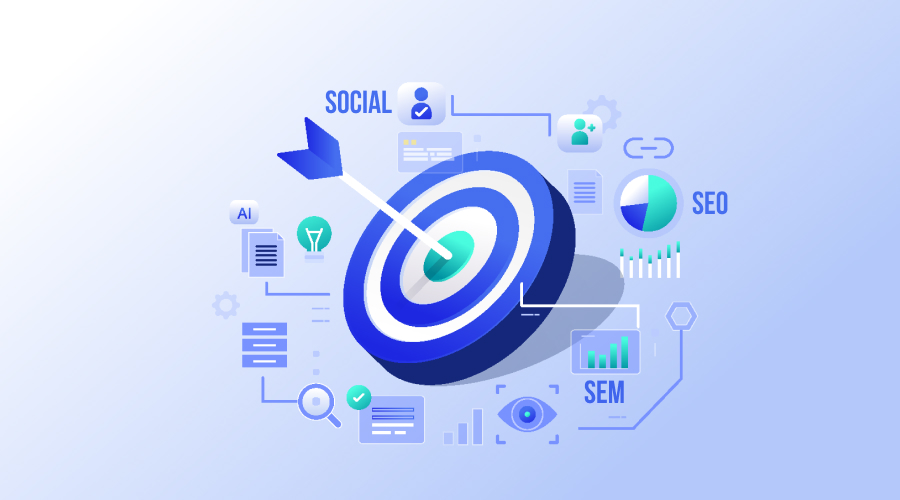
So today, we will compare three major channels: SEO, SEM, and Social Media Ads. You will get an idea of what each does best, along with timelines, costs, and where each shines.

Understanding SEO: The Long-Term Authority Builder
SEO stands for Search Engine Optimization. It improves how your site ranks on search engines. Content, on-page fixes, technical work, and link building all fall under SEO. The aim is organic visibility.

Key Characteristics
SEO takes time. Expect 6–12 months for meaningful gains. It requires ongoing content and technical fixes. You have to keep optimizing it. The investment is mostly time and expertise. Results compound over months. This leads to traffic growth.

Benefits of SEO
SEO builds credibility. Users often trust organic listings more than ads. In fact, a study by Brightedge Research shows that organic search is responsible for 53.3% website traffic across industries.
Once you rank, traffic is effectively “free” — you don’t pay per click. Organic listings usually get higher click-through rates for informational and commercial queries. A steady presence in search results is good. It signals expertise and helps in building brand authority. And it works 24/7 without direct ad spend.

Drawbacks of SEO
SEO is slow. It’s not for urgent lead needs. Search engines update their algorithms often. This affects the rankings, moving them up or down. Moreover, SEO is competitive. In crowded niches, ranking costs are rising. It needs consistent effort in the form of new content, link outreach, and technical maintenance.

Best For
SEO suits businesses planning long-term growth. It fits companies with useful content to share. This includes guides, case studies, and resources. It’s ideal for brands that aim to lead their field. It’s especially important in sectors where trust matters, like healthcare, finance, or B2B services.

Decoding SEM: The Immediate Traffic Generator
Search Engine Marketing means paid search ads. Think Google Ads and Bing Ads. You bid on keywords. You pay when users click.
Key Characteristics
SEM delivers traffic instantly once campaigns launch. The investment is direct ad spend. You pay per click. It also offers granular control. You can target keywords, time of day, devices, and locations.
Benefits of SEM
SEM gives immediate visibility at the top of search results. It targets high-intent queries, i.e., the people who are actively looking for your products or services. ROI is measurable here. You can track cost per acquisition precisely.
SEM scales fast. You can ramp up spending on what performs. It’s also a test bed. Try headlines, offers, and landing pages and learn quickly. Another good thing is that SEM complements SEO by covering keywords you don’t yet rank for.
Drawbacks of SEM
SEM stops working when the budget ends. Competitive keywords can be costly. Some users ignore ads. Campaigns need hands-on management and regular optimization. In the long run, this can prove to be very costly. Finally, click fraud and invalid traffic can waste budget.
Best For
SEM is ideal for product launches and time-limited promotions. Use it when you need leads or sales now. It suits businesses testing new markets or offerings. It also works for high-margin goods where ad spend is justified. SEM is a natural fit for short-term growth and validation.

Exploring Social Media Ads: The Branding & Engagement Powerhouse
Social Media ads are paid ads. These go on platforms such as Facebook, Instagram, LinkedIn, and TikTok. They rely on visuals and storytelling. The focus here is on reach and engagement.
Key Characteristics
Social campaigns can start quickly. Social platforms shine at building community and visual narratives. Results may appear fast, but optimization takes time. Costs here will include ad spend and creative production.
Benefits of Social Media Ads
Social ads build brand awareness. It targets the audiences who aren’t actively searching. You get to tell a visual story, spark interaction, and foster loyalty. You can reach people by interests, behaviors, and lookalike segments. Awareness, consideration, or conversion are the main objectives here.
Drawbacks of Social Media Ads
Social ads are interruption-based. People scrolling a feed may not be ready to buy. Moreover, algorithms can change and affect reach. Or audiences may tire of the same ads (ad fatigue). These ads are designed keeping all these in mind. Conversion intent is typically lower than search, and socials often need more touchpoints to convert.
Best For
Use social media ads when there is a requirement for brand awareness. It works best for visual products like fashion, food, and real estate. Social media ads are also perfect for product launches, building communities, and driving app consideration. Strong visuals in e-commerce brands usually get higher returns from social campaigns.

Head-to-Head Comparison: ROI Analysis
To keep all these things in mind and choose the correct option may prove to be difficult. So to sum it up, here is a comparison between SEO, SEM, and social media ads, based on cost, timing, intent, and longevity.
SEO
- Cost Structure –High initial investment in content and tech.
- Time to Results – 6–12 months for meaningful gains.
- Conversion Intent – High for informational and purchase-ready queries.
- Longevity – Long-lasting; results compound.
SEM
- Cost Structure – Moderate to high; creative refreshes add cost.
- Time to Results – Quick start; optimal performance often in 2–4 weeks.
- Conversion Intent – Variable; ranges from discovery to purchase intent.
- Longevity – Medium-term; needs ongoing investment to sustain reach.
Best ROI by business stage
- Startups – Use SEM to validate ideas fast. Use social to build early awareness.
- Time to Results – Balance all three. Shift more budget to SEO as you scale.
- Established Brands – Lean on SEO for steady traffic. Use SEM for targeted
promotions. Use social media to keep audiences engaged and to launch new products.

Choose What Works Best for Your Business – Partner with Knovial
The different channels serve different purposes. SEO builds long-term authority and steady traffic. SEM delivers immediate outcomes. Social Media Ads grow awareness and engagement. Together, these channels offer the best ROI when used in concert.
Don’t put all your money on one channel. Combine them based on your goals and stage. Need leads today? Focus on SEM. Building a brand? Invest in social. Planning long-term growth? Commit to SEO.
Expert help speeds this process. At Knovial, we offer integrated marketing support, including SEO Services, PPC management, and SMO as part of our marketing suite. Partner with our digital marketing services to build a customized strategy. Track ROI across SEO, SEM, and social.
When search, paid, and social ads work together, each channel raises the others. Plan for stages, measure continually, and iterate. That’s how modest budgets grow into reliable pipelines.